
Category: QA 100 Questions

Q11: What is a variable annuity?
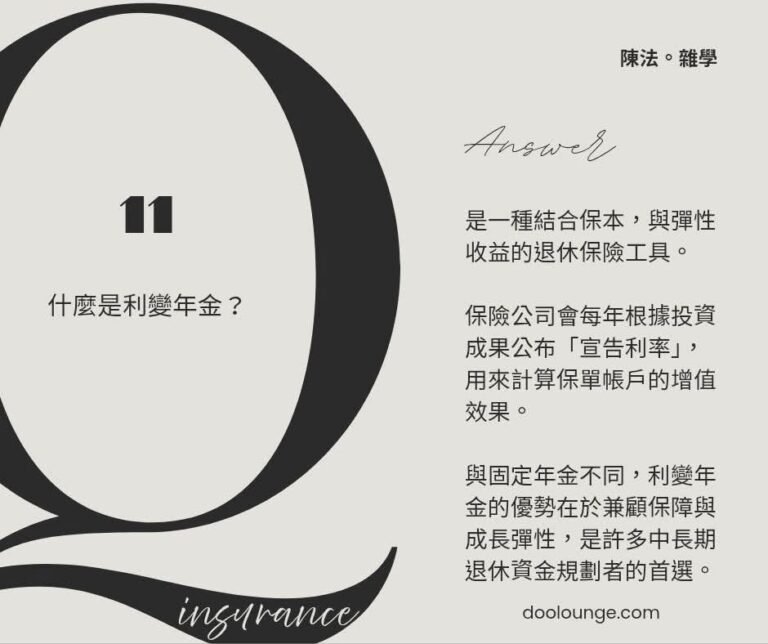
It is a retirement insurance tool that combines capital preservation with flexible returns.

Insurance companies will publish a "declared interest rate" every year based on investment results, which is used to calculate the value-added effect of policy accounts.

Unlike fixed annuities, the advantage of variable annuities is that they balance protection and growth flexibility, making them the first choice for many mid- to long-term retirement fund planners.
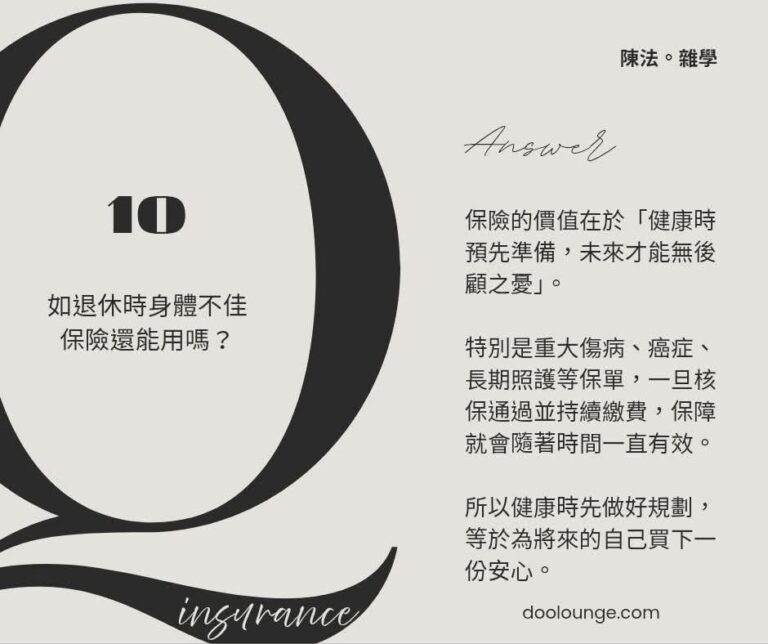
Q10: If I am in poor health upon retirement, can I still use my insurance?

The value of insurance lies in "preparing in advance when you are healthy so that you don't have to worry about the future."

Especially for policies covering major injuries, cancer, long-term care, etc., once the underwriting is passed and premiums are paid continuously, the coverage will remain valid over time.

Therefore, making plans when you are healthy is equivalent to buying peace of mind for your future self.

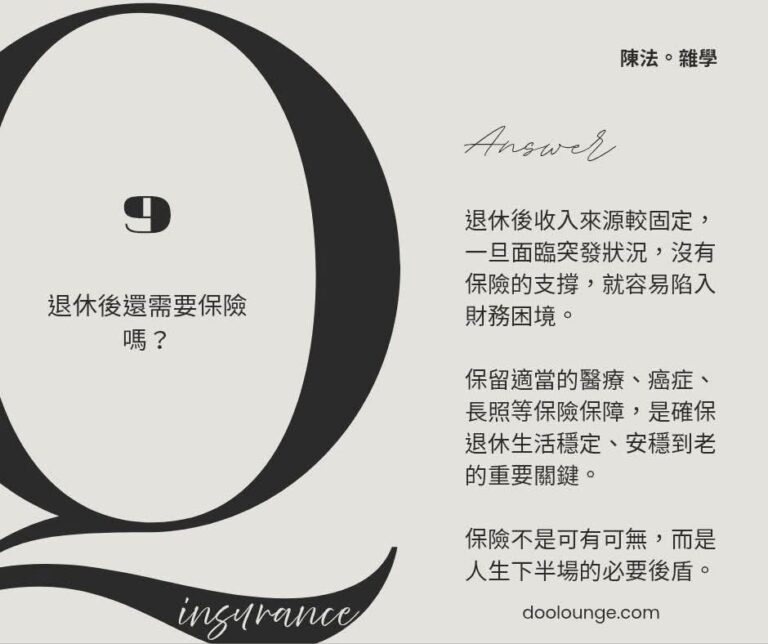
Q9: Do I still need insurance after retirement?

After retirement, the source of income is relatively stable. Once faced with an emergency, without the support of insurance, it is easy to fall into financial difficulties.

Maintaining appropriate medical, cancer, long-term care and other insurance coverage is key to ensuring a stable and secure retirement life.

Insurance is not optional, but a necessary backup for the second half of your life.

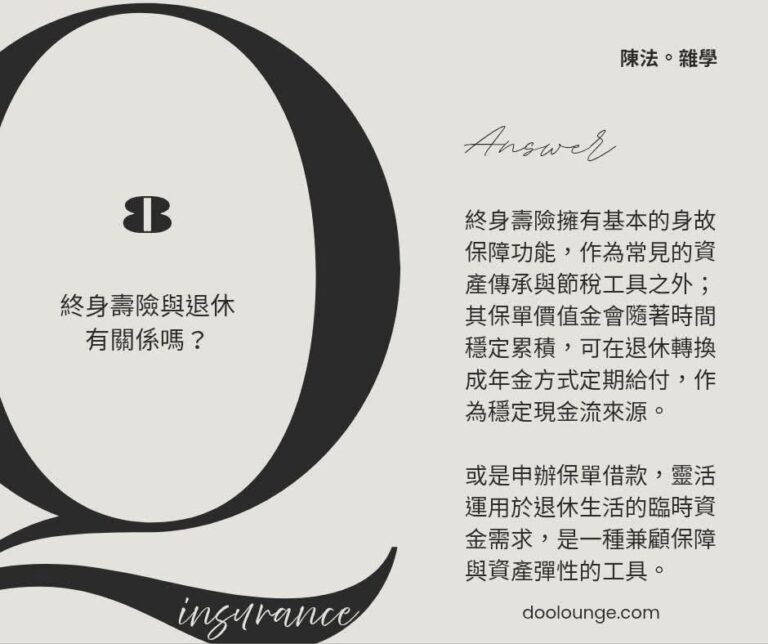
Q8: Is whole life insurance related to retirement?

Whole life insurance has basic death protection functions and is a common asset inheritance and tax saving tool. Its policy value will steadily accumulate over time and can be converted into regular annuity payments in retirement, serving as a stable source of cash flow.

Alternatively, you can apply for a policy loan and flexibly use it to meet temporary funding needs in retirement. This is a tool that balances protection and asset flexibility.

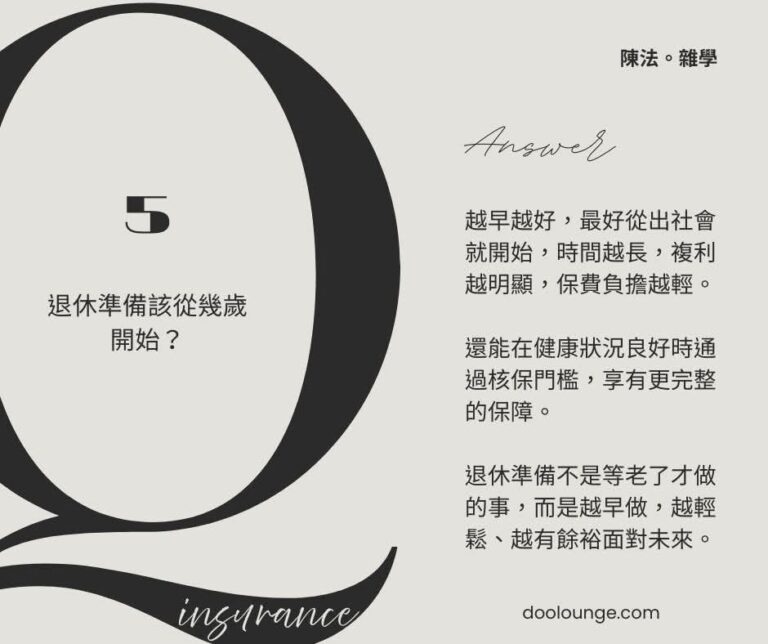
Q5: At what age should I start preparing for retirement?

The earlier the better, it is best to start when you enter society. The longer the time, the more obvious the compound interest and the lighter the premium burden.

You can also pass the underwriting threshold when you are in good health and enjoy more complete protection.

Retirement preparation is not something you wait until you are old to do. The earlier you do it, the easier and more relaxed you will be in facing the future.

Q4: What is annuity insurance?

Annuity insurance is a type of retirement financial management insurance. After reaching an agreed age, you will start to receive a "stable cash flow" on a monthly or annual basis as financial support for your retirement life.

Suitable for people who plan for retirement early and receive more benefits the longer they live.

It is not only a tool for saving retirement funds, but also a good helper for transferring longevity risks.

Q3: Are annuity insurance and pension the same?

Q3: Are annuity insurance and pension the same?

A: Pensions are institutional income that is provided passively by the company or government you work for, while annuity insurance is an active investment personal retirement plan.

After retirement, you may face risks such as longevity, inflation, and medical expenses.

Annuity insurance guarantees a stable source of income and provides more flexible planning and supplements to help you gain more financial autonomy.

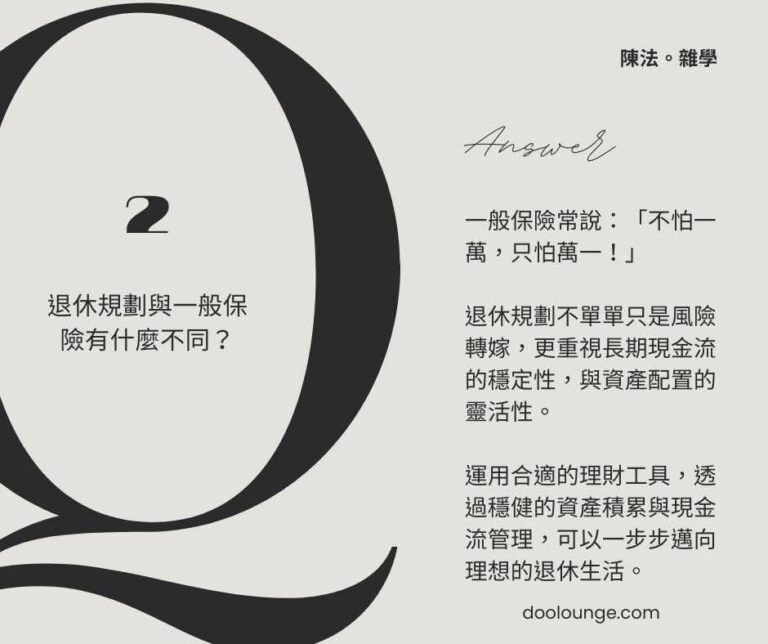
Q2: What is the difference between retirement planning and general insurance?

Q2: What is the difference between retirement planning and general insurance?

A: Generally speaking, insurance companies often say, "Don't be afraid of ten thousand, just be prepared for the one that comes!"

Retirement planning is not just about risk transfer, it also focuses on the stability of long-term cash flow and the flexibility of asset allocation.

By using appropriate financial management tools, through steady asset accumulation and cash flow management, you can move step by step towards your ideal retirement life.

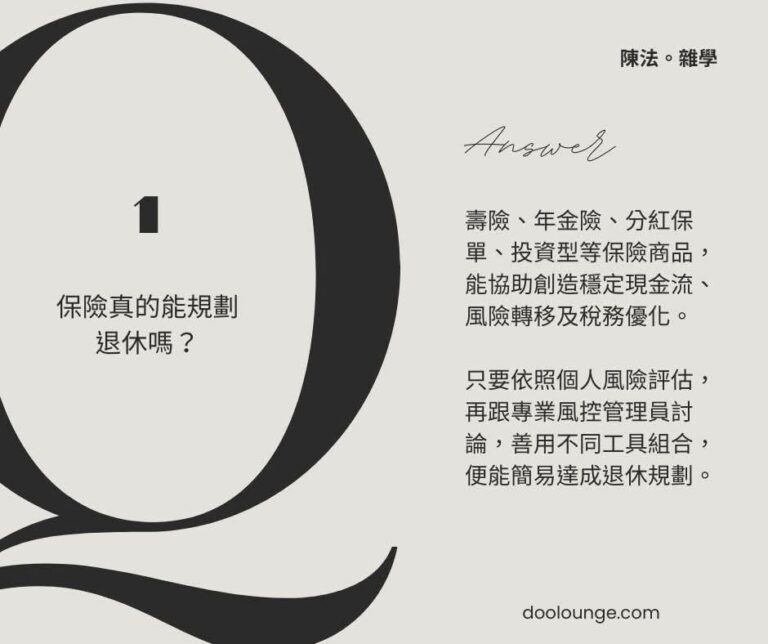
Q1: Can insurance really help plan for retirement?

Q1: Can insurance really help plan for retirement?

A: Life insurance, annuity insurance, participating policies, investment-type insurance and other insurance products can help create stable cash flow, transfer risks and optimize taxes.

As long as you follow your personal risk assessment, discuss with professional risk management managers, and make good use of a combination of different tools, you can easily achieve your retirement planning.

Q3: Why is my hair frizzy?

Q3: Why is my hair frizzy?

A: Common causes include excessive dyeing or perming, UV exposure, and lack of moisturizing.
As we all know, it can be improved by using hair oil or repairing conditioner.

In fact, hair damage is not just what you generally know. The most common and overlooked reason is the temperature problem of the hair dryer.

Common hair dryers do not have a constant temperature function, so the longer you blow, the higher the temperature becomes, causing your hair to be excessively damaged when blow-drying every day.

en_US