
Category: Insurance

Q11: What is a variable annuity?
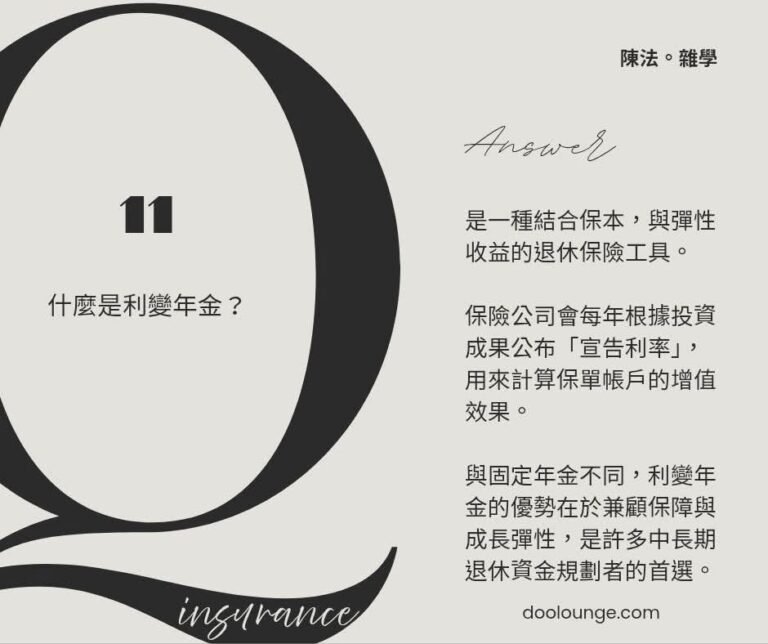
It is a retirement insurance tool that combines capital preservation with flexible returns.

Insurance companies will publish a "declared interest rate" every year based on investment results, which is used to calculate the value-added effect of policy accounts.

Unlike fixed annuities, the advantage of variable annuities is that they balance protection and growth flexibility, making them the first choice for many mid- to long-term retirement fund planners.
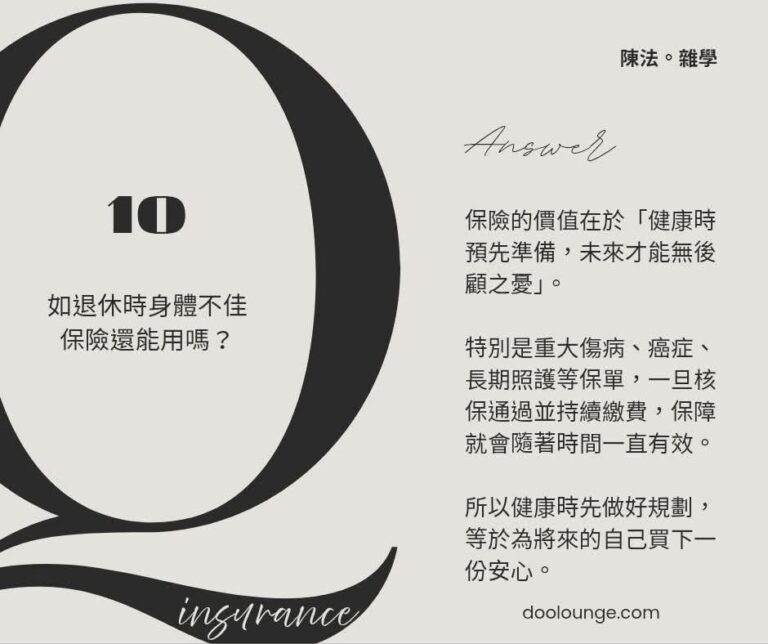

Q10: If I am in poor health upon retirement, can I still use my insurance?

The value of insurance lies in "preparing in advance when you are healthy so that you don't have to worry about the future."

Especially for policies covering major injuries, cancer, long-term care, etc., once the underwriting is passed and premiums are paid continuously, the coverage will remain valid over time.

Therefore, making plans when you are healthy is equivalent to buying peace of mind for your future self.

Q9: Do I still need insurance after retirement?

After retirement, the source of income is relatively stable. Once faced with an emergency, without the support of insurance, it is easy to fall into financial difficulties.

Maintaining appropriate medical, cancer, long-term care and other insurance coverage is key to ensuring a stable and secure retirement life.

Insurance is not optional, but a necessary backup for the second half of your life.

Q8: Is whole life insurance related to retirement?

Whole life insurance has basic death protection functions and is a common asset inheritance and tax saving tool. Its policy value will steadily accumulate over time and can be converted into regular annuity payments in retirement, serving as a stable source of cash flow.

Alternatively, you can apply for a policy loan and flexibly use it to meet temporary funding needs in retirement. This is a tool that balances protection and asset flexibility.

Is it that the insurance policy is wrong, or is there no one checking for you?

Investment-type insurance is often misunderstood as "easy to lose money." In fact, the problem lies not with the product, but with the lack of professional planning and continuous attention.

By keeping the underlying asset below RR3, maintaining stable monthly dividends, and having professional advisors adjust the allocation at any time, investment-type insurance policies can balance protection and asset growth, becoming a solid foundation for financial planning.

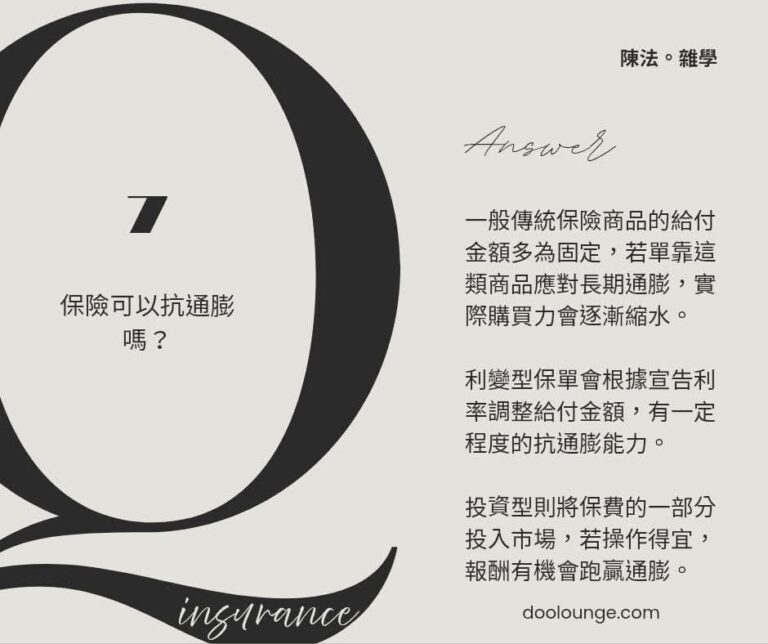
Q7: Can insurance protect against inflation?

Generally, the payment amount of traditional insurance products is fixed. If we rely solely on such products to cope with long-term inflation, the actual purchasing power will gradually shrink.

Variable interest insurance policies will adjust the payment amount according to the declared interest rate and have a certain degree of resistance to inflation.

The investment type invests part of the premium into the market. If operated properly, the returns have the potential to outperform inflation.

By combining different industries, let us embark on a broader path together!

I have expertise in real estate and insurance, allowing me to provide clients with a more comprehensive range of services, including credit line planning, loan negotiation, repurchase tax refund execution, asset and tax saving strategies, and real estate + insurance investment portfolios.

We don’t have to leave our core business; we can combine different industries, complement each other’s expertise, enhance customer trust and satisfaction, and create a win-win-win situation for all parties.

Dear real estate agents, let’s talk about the possibility of cooperation!

Q6: Is insurance enough for retirement planning?

It is not recommended to rely solely on insurance; it should be combined with other tools such as savings, investments, and social insurance.

Diversification and risk diversification are effective and stable retirement planning strategies.

In other words, insurance is the foundation, but it cannot exist without other structures to support the entire financial building.

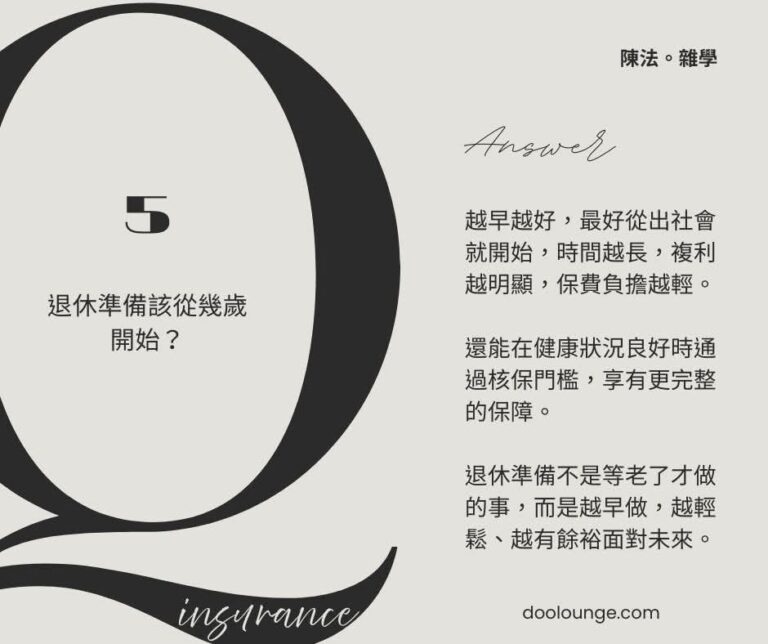
Q5: At what age should I start preparing for retirement?

The earlier the better, it is best to start when you enter society. The longer the time, the more obvious the compound interest and the lighter the premium burden.

You can also pass the underwriting threshold when you are in good health and enjoy more complete protection.

Retirement preparation is not something you wait until you are old to do. The earlier you do it, the easier and more relaxed you will be in facing the future.

en_US